What Is the University For? Fall Speaker – Dr. Ruth Goldstein
“Life in Traffic: Women, Plants, and Gold Along South America’s Interoceanic Highway”
Dr. Ruth Goldstein
Wed, October 28th, 1:00pm
Irving & Dorothy Levy Hall
232 North Park Street
5th Floor, room #5188
In the year 2000, the presidents of Brazil, Peru, and Bolivia agreed to construct the Interoceanic Highway as part of the Initiative for the Integration of the Regional Infrastructure of South America. Instead of bringing the promised economic benefits to the shared triple-frontier Amazonian region, the highway facilitated trade in extracted natural resources as well as a traffic in women. Centering “traffic” as both an analytic and a method, Ruth E. Goldstein argues that projects like this 3,500-mile highway have deeply gendered effects, reorganizing political economies of sex, nature, kinship, and care. Life in Traffic underscores how markets for women, plants, and gold are not just intersecting phenomena but historically co-constituted economies. Amazonian extractive industries, too, have global ramifications for a warming planet: as rainforests disappear, so do the oxygen-creating, carbon-sequestering, and life-sustaining abilities of Mother Earth.
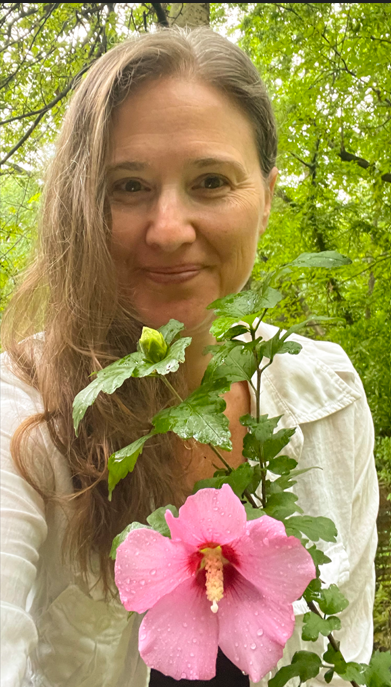
Dr. Ruth Goldstein (she/her) is Assistant Professor of Gender and Women’s Studies at the University of Wisconsin–Madison. She is broadly interested in the gendered aspects of human and nonhuman health, a quickly heating planet and environmental racism. Her book: Life in Traffic: Women, Plants, and Gold Along South America’s Interoceanic Highway examines the socio-environmental consequences of transnational infrastructure projects and climate change along South America’s recently constructed longest latitudinal thoroughfare , with a particular focus on intersections of race and Indigeneity, cis and trans women’s health and “earth” rights in Brazil and Peru. Her subsequent research on mercury as a global pollutant analyzes the racialized weight of toxic body burdens and impacts on parent/child health.